

Why Turnkey EPC Projects Are the Future of Electrical Infrastructure Development in India
Introduction
India’s infrastructure sector is witnessing unprecedented growth, driven by rapid industrialization, urban expansion, renewable energy initiatives, and large-scale government investments in power transmission and distribution. As infrastructure projects become more complex, organizations are increasingly choosing Turnkey Engineering, Procurement, and Construction (EPC) solutions to ensure seamless execution, cost efficiency, and timely project delivery.
A turnkey EPC model enables clients to work with a single engineering partner responsible for every phase of the project—from planning and design to procurement, construction, testing, commissioning, and final handover. This integrated approach minimizes project risks, improves quality, and ensures accountability throughout the project lifecycle.
At SAS Infra Engineering Pvt. Ltd., we have been delivering reliable electrical infrastructure and turnkey EPC solutions since 1996, helping industries, government organizations, and power utilities build dependable electrical systems that support long-term growth.
What is a Turnkey EPC Project?
A Turnkey EPC project is a comprehensive engineering solution where a single contractor manages the complete project from concept to completion.
The client simply defines the project requirements, while the EPC contractor takes responsibility for:
- Engineering and Design
- Material Procurement
- Equipment Supply
- Construction and Installation
- Testing and Commissioning
- Quality Assurance
- Safety Management
- Final Project Handover
This model significantly reduces coordination challenges because all activities are managed by one experienced organization.
Why Businesses Prefer Turnkey EPC Solutions
Today’s industries require faster execution, better quality, and predictable costs. Managing multiple contractors often results in communication gaps, project delays, and budget overruns.
Turnkey EPC services eliminate these challenges by offering complete project ownership.
Single Point of Responsibility
Instead of coordinating with multiple vendors, consultants, and contractors, clients interact with one experienced engineering partner throughout the project.
This simplifies communication and improves decision-making.
Faster Project Completion
Integrated planning allows engineering, procurement, and construction activities to progress simultaneously wherever possible.
The result is:
- Reduced project delays
- Better coordination
- Faster commissioning
- Earlier operational readiness
Better Cost Control
Proper planning and procurement help minimize unnecessary expenses while maintaining quality standards.
Clients benefit from:
- Transparent budgeting
- Controlled procurement
- Reduced wastage
- Efficient resource utilization
Improved Quality Standards
Quality is maintained at every stage of execution through:
- Material inspections
- Engineering reviews
- Site supervision
- Performance testing
- Final commissioning
This systematic approach ensures that every component performs as intended before project handover.
Electrical Infrastructure That Powers Industries
Reliable electrical infrastructure is the foundation of every industrial and commercial operation.
Whether it is a manufacturing facility, power plant, commercial complex, hospital, educational institution, or government infrastructure project, uninterrupted electrical systems are essential for smooth operations.
Professional electrical infrastructure typically includes:
- High Voltage (HT) Systems
- Low Voltage (LT) Systems
- Distribution Panels
- Transformers
- Switchgear
- Underground Cabling
- Earthing Systems
- Power Distribution Networks
- Substations
- Protection Systems
Each component must be carefully engineered to deliver maximum efficiency, safety, and reliability.
The Importance of Substation Development
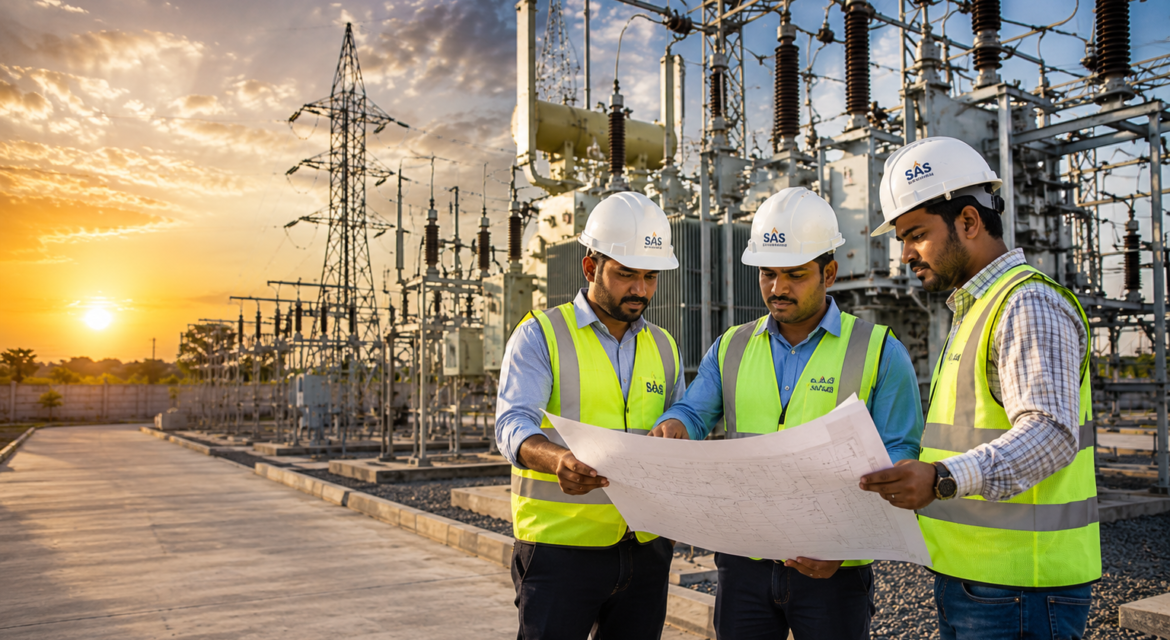
Electrical substations play a critical role in transmitting and distributing electricity safely and efficiently.
Modern substations are designed to:
- Regulate voltage levels
- Protect electrical equipment
- Improve system reliability
- Support future load expansion
- Minimize transmission losses
Proper substation engineering requires technical expertise, precision planning, and strict adherence to industry standards.
Safety is Never Compromised
Electrical engineering projects involve high-voltage systems, heavy equipment, and complex installations.
Safety is therefore one of the most important aspects of every EPC project.
Professional engineering companies follow established safety practices, including:
- Risk assessment
- Safety training
- Personal Protective Equipment (PPE)
- Electrical isolation procedures
- Equipment inspections
- Site safety audits
- Compliance with statutory regulations
Maintaining a strong safety culture not only protects workers but also ensures uninterrupted project progress.
Technology is Transforming Electrical Engineering
Modern electrical infrastructure projects now incorporate advanced technologies to improve efficiency and project management.
Some of these include:
Digital Project Planning
Software-based planning improves scheduling, resource allocation, and project tracking.
Computer-Aided Design (CAD)
Detailed engineering drawings help minimize design errors and improve installation accuracy.
Advanced Testing Equipment
Modern diagnostic tools ensure electrical systems meet required performance standards before commissioning.
Preventive Maintenance
Regular inspections and predictive maintenance reduce downtime and extend equipment life.
Technology-driven engineering ultimately results in better project quality and improved operational reliability.
Why Experience Matters
Electrical infrastructure projects require specialized expertise that can only be developed through years of practical experience.
Experienced EPC contractors understand:
- Project planning
- Electrical system design
- Regulatory compliance
- Site coordination
- Risk management
- Budget optimization
- Quality assurance
- Timely execution
This expertise helps clients avoid costly mistakes while ensuring successful project completion.
Industries We Serve
Electrical infrastructure supports nearly every major sector of the economy.
Professional EPC contractors typically work across:
- Power Utilities
- Government Infrastructure
- Industrial Manufacturing
- Commercial Buildings
- Oil & Gas Facilities
- Educational Institutions
- Healthcare Infrastructure
- Smart Cities
- Public Sector Enterprises
- Energy Distribution Projects
Every industry has unique technical requirements, making customized engineering solutions essential.
Why Choose SAS Infra Engineering Pvt. Ltd.?
With nearly three decades of experience, SAS Infra Engineering Pvt. Ltd. has established itself as a trusted name in electrical infrastructure development.
Our strengths include:
- Established in 1996
- Comprehensive Turnkey EPC Solutions
- Electrical Consultancy Services
- HT & LT Electrical Systems
- Substation Engineering
- Testing & Commissioning
- Operation & Maintenance Services
- Experienced Engineering Professionals
- Quality-Driven Project Execution
- Strong Commitment to Safety
Our customer-first approach, technical expertise, and focus on timely delivery have enabled us to successfully execute electrical infrastructure projects for government agencies, utilities, industries, and commercial organizations.
Building India’s Electrical Future
India’s growing demand for reliable electricity requires infrastructure that is efficient, safe, and future-ready.
Turnkey EPC projects provide an ideal solution by integrating engineering excellence with streamlined execution, ensuring projects are delivered on time, within budget, and to the highest quality standards.
As industries continue to expand and infrastructure investments increase, experienced engineering partners will play an increasingly important role in powering the nation’s progress.
At SAS Infra Engineering Pvt. Ltd., we remain committed to delivering innovative electrical infrastructure solutions that create long-term value for our clients while contributing to India’s sustainable development.