

Electrical Infrastructure: The Backbone of Industrial Growth and Sustainable Development
Introduction
Electricity is one of the most essential resources driving economic development and industrial progress. Behind every manufacturing unit, commercial complex, hospital, educational institution, and public utility lies a well-planned electrical infrastructure that ensures uninterrupted power distribution and operational efficiency.
As India’s infrastructure sector continues to expand through industrial corridors, smart cities, renewable energy projects, and modernization of power networks, the demand for reliable electrical engineering services has increased significantly.
Developing a safe, efficient, and future-ready electrical system requires technical expertise, advanced engineering practices, and precise project execution. At SAS Infra Engineering Pvt. Ltd., we have been delivering dependable electrical infrastructure and engineering solutions since 1996, supporting industries, government organizations, and commercial enterprises with high-quality electrical projects.
Understanding Electrical Infrastructure
Electrical infrastructure refers to the complete network of systems responsible for generating, transmitting, distributing, and utilizing electrical energy safely and efficiently.
A professionally designed electrical infrastructure typically includes:
- Power Transmission Systems
- Electrical Substations
- High Voltage (HT) Networks
- Low Voltage (LT) Distribution
- Transformers
- Switchgear
- Distribution Panels
- Underground & Overhead Cabling
- Earthing Systems
- Protection & Control Systems
Each component plays an important role in ensuring uninterrupted and safe electricity supply.
Why Reliable Electrical Infrastructure Matters
An efficient electrical system is more than just supplying power—it directly impacts productivity, safety, operational costs, and long-term business performance.
Improved Operational Efficiency
A properly engineered electrical network minimizes voltage fluctuations, equipment failures, and unexpected downtime, allowing businesses to maintain continuous operations.
Enhanced Safety
Professional electrical installations reduce the risks associated with short circuits, overloads, equipment failures, and electrical hazards by following established engineering standards and safety protocols.
Long-Term Cost Savings
Well-designed infrastructure lowers maintenance costs, reduces energy losses, and extends the operational life of electrical equipment.
Scalability for Future Expansion
Modern electrical systems are designed with future growth in mind, making it easier to expand industrial facilities, commercial buildings, and infrastructure projects without major redesign.
Key Components of Modern Electrical Infrastructure
High Tension (HT) Systems
HT systems are responsible for transmitting electricity over long distances while minimizing power losses. These systems are commonly used in industries, utilities, and large infrastructure projects.
Low Tension (LT) Distribution
LT systems distribute electricity safely within commercial buildings, factories, hospitals, and residential developments.
Proper LT distribution ensures:
- Stable power supply
- Equipment protection
- Efficient energy utilization
- Reliable day-to-day operations
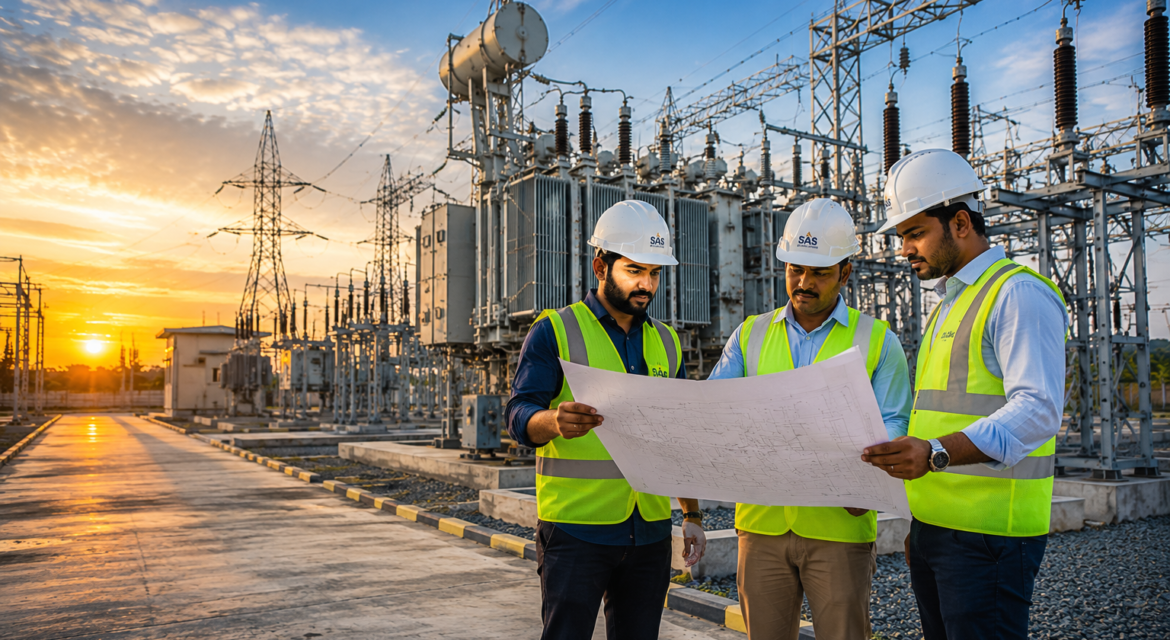
Electrical Substations
Substations play a crucial role in controlling voltage levels and distributing electricity to different locations.
Modern substations improve:
- Grid reliability
- Load management
- Equipment protection
- Energy efficiency
They are an integral part of every power distribution network.
Transformers
Transformers regulate voltage levels based on operational requirements and ensure efficient power transmission between different parts of the electrical network.
Their performance directly affects the reliability of industrial and commercial operations.
Protection Systems
Protective devices such as circuit breakers, relays, and surge protection equipment help prevent equipment damage during electrical faults.
An effective protection system minimizes downtime and enhances workplace safety.
Engineering Excellence Through Turnkey Solutions
Managing electrical infrastructure projects involves multiple activities, including planning, procurement, installation, testing, commissioning, and maintenance.
A turnkey engineering approach integrates all these services under one experienced partner, simplifying project management and improving execution quality.
Turnkey solutions generally include:
- Site Survey
- System Design
- Engineering Consultancy
- Material Procurement
- Installation
- Testing & Commissioning
- Quality Assurance
- Project Handover
- Maintenance Support
This integrated approach helps clients reduce project complexity while ensuring timely completion.
Importance of Quality and Safety
Electrical infrastructure projects demand strict quality control and uncompromising safety standards.
Professional engineering companies implement quality management practices throughout every stage of execution.
Key quality measures include:
- Material Inspection
- Engineering Verification
- Equipment Testing
- Installation Audits
- Performance Evaluation
- Final Commissioning
Similarly, safety remains a top priority through:
- Risk Assessments
- Safety Training
- PPE Compliance
- Electrical Isolation Procedures
- Site Supervision
- Regular Safety Audits
Maintaining quality and safety not only protects personnel but also improves the reliability and lifespan of electrical systems.
Applications Across Industries
Reliable electrical infrastructure supports a wide range of industries and institutions.
Some major sectors include:
- Manufacturing Industries
- Power Utilities
- Commercial Buildings
- Healthcare Facilities
- Educational Institutions
- Oil & Gas Projects
- Government Infrastructure
- Industrial Parks
- Warehousing & Logistics
- Public Sector Enterprises
Every industry has unique operational requirements, making customized engineering solutions essential.
Benefits of Choosing an Experienced Engineering Partner
Electrical infrastructure projects require technical expertise, project management capabilities, and industry knowledge.
An experienced engineering company offers several advantages:
- Proven technical expertise
- Better project planning
- Faster execution
- Regulatory compliance
- Cost optimization
- Efficient resource management
- Superior quality standards
- Reliable after-project support
These capabilities contribute significantly to the overall success of complex electrical projects.
Why Choose SAS Infra Engineering Pvt. Ltd.?
Since 1996, SAS Infra Engineering Pvt. Ltd. has been committed to delivering reliable electrical engineering and infrastructure solutions for government, industrial, commercial, and utility projects.
Our core expertise includes:
- Electrical Consultancy
- Turnkey EPC Projects
- High Voltage & Low Voltage Systems
- Electrical Substations
- Testing & Commissioning
- Power Distribution Networks
- Operation & Maintenance Services
- Industrial Electrical Infrastructure
Backed by experienced engineers, skilled professionals, and a customer-focused approach, we consistently deliver projects that meet the highest standards of quality, safety, and efficiency.
Conclusion
Electrical infrastructure is the foundation of every modern economy. As industries expand and power requirements continue to grow, the need for professionally engineered electrical systems has never been greater.
From substations and power distribution networks to turnkey EPC projects and maintenance services, every component contributes to creating reliable, efficient, and sustainable infrastructure.
By partnering with an experienced engineering company, organizations can ensure safe project execution, optimized operational performance, and long-term value.
At SAS Infra Engineering Pvt. Ltd., we remain dedicated to building dependable electrical infrastructure that powers industries, strengthens communities, and supports India’s continued growth.